Drills
12 Products
Imagine the moment when you finally find drill bits that perfectly match your style and needs. Whether you're a home handyman, a DIY enthusiast, or a professional craftsman, choosing the right drill bits determines the precision and efficiency of every job. Our selection includes drill bits for various materials – from wood and metal to concrete and ceramic. With a focus on quality and long lifespan, we help you select tools that can handle even demanding projects. Discover practical solutions for your workshop today.
Angled attachment for a screwdriver - Type 2
Step drill Set - Black / 3pcs
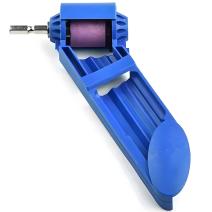
Portable Drill Sharpener - Blue 12.5mm
Drill Bit Set - Gold / 3pcs
Universal Key - Silver
Cross drill bit - 5mm
Universal Key - Purple
Universal Key - Yellow
Universal Key - Red
Universal Key - Black
Universal Key - Blue
Drills
Drill bits are among the essential tools in any workshop. Choosing the right ones affects not only drilling precision but also the tool's lifespan and the final quality of your work. In the following lines, we will look at what to consider when selecting drill bits, what materials and designs are available, and how to properly care for them.
How to Choose the Right Drill Bits
When selecting drill bits, it is crucial to consider the material you will be drilling into. Each type of drill bit is optimized for different conditions – different sharpening, tip geometry, and surface coating. For example, drilling into soft wood, simple HSS drill bits suffice, while for hard oak or exotic woods, we recommend carbide-tipped bits that minimize fiber tearing. For metals like stainless steel or aluminum, titanium-coated bits are ideal as they reduce friction and dissipate heat. For concrete and masonry, carbide bits with hard metal tips are essential, capable of handling even rebar. For ceramic and glass, use special bits with a diamond abrasive surface to prevent material cracking.
Tip Geometry and Its Impact on Precision
Different types of drill bits have varying tip geometries that directly affect drilling precision and chip removal speed. Split point grinding is ideal for precise drilling into metal, as it eliminates bit wandering on the surface. Step drill bits have a conical shape with multiple diameters, allowing you to drill holes of various sizes without changing tools – practical for working with sheet metal or plastics. Angle attachments, on the other hand, are invaluable for drilling in hard-to-reach places, such as cabinet corners or behind pipes.
Quality and Materials of Drill Bits
High-quality drill bits are made from high-speed steel (HSS) or tungsten carbide. HSS bits are suitable for general drilling into metal, wood, and plastics, while carbide bits handle harder materials like concrete or ceramic. Surface coatings – such as titanium nitride (TiN) or black oxide – increase wear resistance and reduce friction. For professional use, we recommend bits with multi-layer coatings that can last up to 5 times longer than standard HSS bits. Manufacturing precision is also important – bits with a diameter tolerance of up to 0.01 mm ensure accurate holes without play.
Comparison of Surface Coatings
Titanium nitride (TiN) coating is the most common and gives a golden color. It is suitable for drilling into steel, cast iron, and aluminum. Black oxide is less durable but reduces friction and is suitable for soft metals and wood. Carbide bits often have a diamond coating, which is extremely hard and suitable for glass, ceramic, and hardened steels. When choosing, consider the material you will drill most often – for home use, HSS bits with TiN coating suffice; for professional projects, opt for carbide bits.
Maintenance and Care of Drill Bits
Proper maintenance extends the lifespan of drill bits and maintains their cutting ability. After each use, clean the bits of chips and dust – ideally with a brush or compressed air. Store them in a dry environment, preferably in an organizer or case, to prevent tip damage. A drill bit sharpener is a useful accessory – it allows you to restore the edge even for home use. When drilling, use the appropriate speed and pressure – too high a speed can cause overheating and loss of edge. For harder materials, we recommend using cooling (e.g., oil or water). Regularly check the condition of the tip – a dull bit reduces precision and increases the risk of breakage. If you notice the bit smoking or producing uneven chips during drilling, it is time for sharpening or replacement.
Explore our range of drill bits and choose tools that will make every project easier. Whether you need precise drilling into metal or robust bits for concrete, you will find proven solutions for your workshop here.
Category information
Important safety notice for drill bits in accordance with Regulation (EU) 2023/988 on general product safety (GPSR)
This is a targeted safety notice for the correct and safe use of drill bits. As these are sharp and rapidly rotating tools during operation with possible chip ejection and dust generation, follow the instructions below to avoid injuries, material damage, and property damage.
Basic safety and handling principles
- Keep out of reach of children: Drill bits have sharp edges and pointed tips; the product is not a toy.
- Personal protection: Use safety goggles, hearing protection during noisy work, and a respirator when dusty; tie back long hair and remove loose clothing and jewelry.
- Inspection before use: Check for cracks, bending, wear of the cutting edge, and integrity of the shank. Do not use damaged drill bits.
- Secure clamping: Always firmly clamp the drill bit into the chuck and verify the shank compatibility (e.g., cylindrical, 1/4 hex, SDS-plus, SDS-max) with the tool.
- Workpiece clamping: Clamp the material with clamps or in a vise; do not work with a loosely held workpiece.
Correct and safe use
- According to purpose and material: Use the type of drill bit suitable for wood, metal, masonry, concrete, glass, or ceramics and set the correct speed, hammer action, and pressure according to the manufacturer’s instructions.
- Hidden installations: Before drilling into walls, check for electrical, water, and gas lines with a detector; do not drill in areas with increased risk of hitting installations.
- Drilling technique: Start at low speeds, you can center the surface with a punch; for deep holes, periodically withdraw the drill bit to remove chips and cool it.
- Cooling and lubrication: Use appropriate cutting lubricant for metal; drill glass and ceramics without hammer action and at low speeds according to instructions.
- Prevention of jamming: Do not apply excessive pressure; if the drill bit jams, release the trigger before withdrawing the bit. Use an auxiliary handle if available.
- After drilling: The drill bit may be hot; do not touch it with bare hands and allow it to cool down.
Cleaning, maintenance, and storage
- Cleaning: Remove chips and dust with a brush; do not blow with your mouth. Keep the shank and cutting part clean and dry.
- Maintenance: Sharpen or replace dull drill bits; do not use rusty or damaged pieces. Regularly check sets for completeness and condition.
- Storage: Store in the original case or stand with covered tips, in a dry place away from moisture and aggressive chemicals.
Specific health warnings
- Chips and dust: Chips can injure eyes and skin; dust from wood and especially concrete and masonry can irritate the respiratory tract.
- Vibrations and fatigue: Take breaks during prolonged work; excessive vibrations can cause hand fatigue and reduce control over the tool.
Disposal
- Safe disposal: Wrap broken or irreparably worn drill bits so they do not injure persons handling waste and hand them over for metal collection according to local regulations.
Incidents and contact
- In case of an incident (cut, puncture, eye injury, or hitting installations), immediately stop work and seek medical assistance if necessary. Keep the product and proof of purchase for complaint processing.