Kitchen knives

362 Products

Save time when making your decision — our carefully curated selection of kitchen knives brings together selected pieces in one place. Whether you are a home cook or a professional, a quality knife is the foundation of every meal preparation. In our range, you will find knives made of Damascus steel, stainless steel kitchen knives, and practical sets for a complete kitchen setup. We have selected each model with an emphasis on sharpness, ergonomics, and long-lasting performance, so you can always achieve a precise cut when slicing, chopping, or filleting.

ME-35098 Slicing Kitchen Knife - Black

ME-35098 Slicing Kitchen Knife - Black

23,35 €
Last piece!
Kitchen Knife BL-39281 - Slicing / Green

Kitchen Knife BL-39281 - Slicing / Green

25,65 €
Last 3 pieces!
Kitchen knives

Kitchen knives are among the most important tools in any household. Their quality directly affects not only the final appearance of the dish but also safety and workflow efficiency. Our range includes a wide variety of knives, from traditional stainless steel models to luxurious Damascus pieces that stand out for both functionality and design. The right knife can transform everyday cooking into a smooth and enjoyable experience, reducing the risk of injury and saving time during food preparation.

How to choose the right kitchen knife based on use

When selecting a knife, it is essential to focus on several factors. The first is the blade material — stainless steel is resistant to corrosion and easy to maintain, while Damascus steel offers exceptional hardness and longer edge retention. The ergonomics of the handle are also important — knives with rubberized, wooden, or polypropylene handles fit better in the hand and reduce fatigue during prolonged use, such as when preparing large batches of vegetables for preserving.

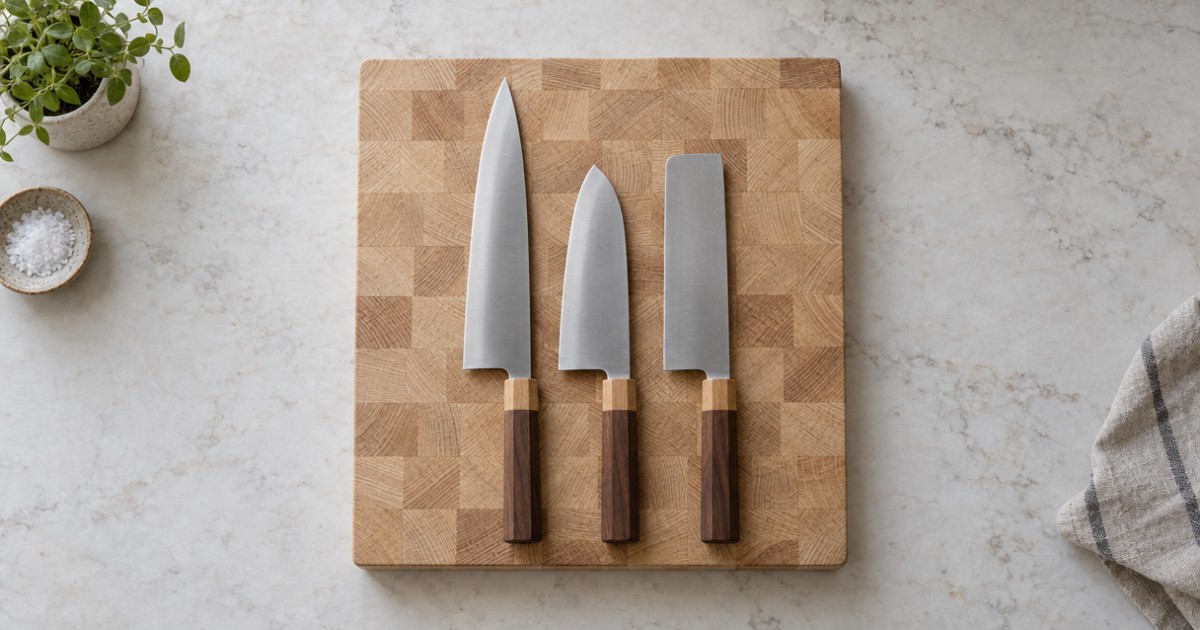
The type of knife should match your culinary needs. A universal kitchen knife with a blade length of 18–20 cm is suitable for everyday cutting of vegetables, fruit, and meat. For precise cuts, such as filleting fish or slicing sushi, we recommend specialized knives like the kiritsuke or santoku, which have a thinner and sharper blade. For beginners, a knife set that covers all basic tasks — from slicing bread to portioning poultry — is ideal.

Quality and materials in our range

The Damascus knives available in our store are crafted using the traditional technique of folding steel, which creates a characteristic pattern on the blade. These knives are exceptionally sharp and durable, suitable for demanding cooks who require precision when preparing dishes like carpaccio or sashimi. Stainless steel models, on the other hand, excel in easy maintenance and affordability while retaining high functionality — they are ideal for everyday household use.

Handles are available in various designs — from ergonomic plastic to natural wood in dark brown and black shades. Each material has its advantages: wood looks elegant and feels pleasant to the touch, while synthetic materials are more resistant to moisture and easier to clean. For knives with wooden handles, we recommend regular treatment with mineral oil to prevent the wood from cracking and to preserve its appearance.

Tips for knife care

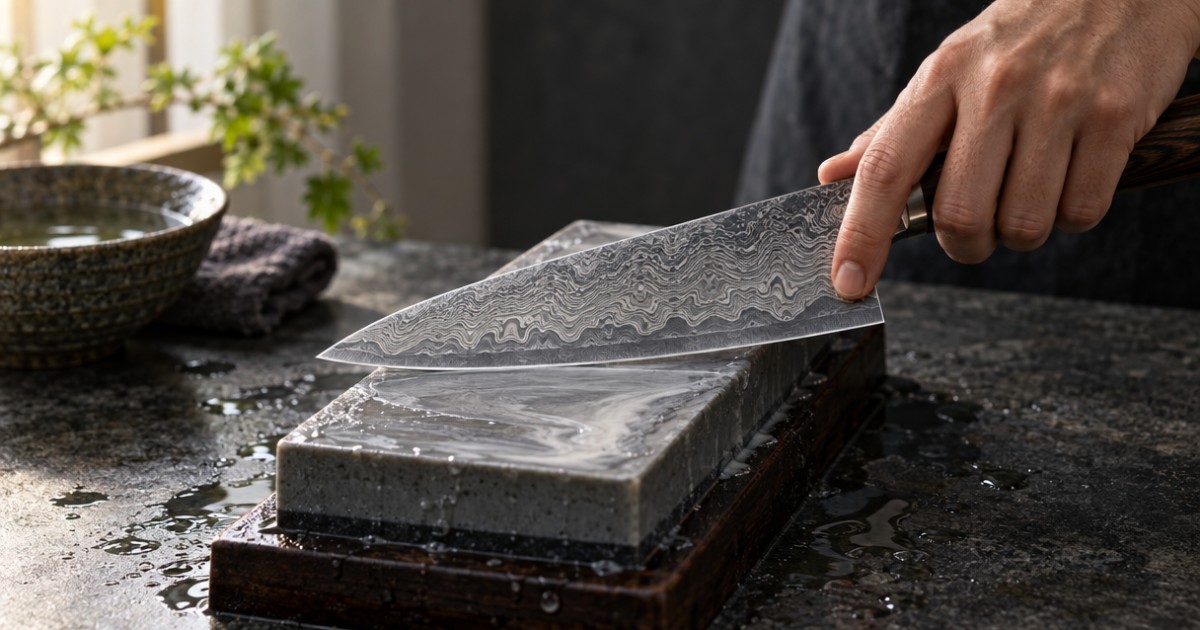
To ensure your knives last as long as possible, we recommend sharpening them regularly with a honing steel or whetstone — ideally after every second use. Store them in a knife block or on a magnetic strip to prevent damage to the edge. Wash them by hand with a mild detergent and dry them immediately — dishwashers can damage the edge and surface finish, especially on Damascus steel.

Trends and styles in kitchen knives

Currently, Japanese knives are very popular, combining traditional craftsmanship with modern materials. Knives with a Damascus steel blade and a Pakka wood handle are not only functional but also aesthetically impressive — they make a great gift for cooking enthusiasts. For minimalist kitchens, we recommend knives in a black finish with a matte surface, which are resistant to fingerprints and easy to maintain.

Explore our range of kitchen knives and choose the right tool that will make your everyday cooking easier and bring you the joy of precise cuts.

How to choose

When choosing a kitchen knife, focus on the blade material, handle type, and intended use. Below is an overview of the most common combinations to help you navigate our range and select a knife that perfectly matches your needs.

Type of use Blade material Suitable for
Universal slicing and chopping Stainless steel (HRC 56-58) Home cooks and beginners
Precision cuts and fish filleting Damascus steel (HRC 60-62) Advanced users and professionals
Japanese cuisine (sushi, sashimi) High-carbon Damascus steel Lovers of Asian gastronomy
Multi-purpose set for home cooking Stainless steel (HRC 55-57) Beginners and families with children
Portioning meat and poultry Stainless steel with surface finish Home grilling masters

Before purchasing, check these important aspects that will affect your comfort and safety while working:

  • Blade length — universal is 15–20 cm, for larger pieces of meat go for 20–25 cm, for peeling and small cuts 10–12 cm is sufficient.
  • Maintenance compatibility — Damascus knives require regular sharpening with a whetstone, stainless steel models are less demanding and a honing steel will suffice.
  • Handle ergonomics — test whether it fits your hand and is not slippery; rubberized and wooden handles offer a better grip with greasy hands.
  • Storage method — get a knife block or magnetic strip to prevent damage to the edge and keep your knives always within reach.
  • Knife weight — lighter knives (around 150–200 g) are suitable for precision cuts, heavier ones (250–350 g) for chopping and portioning.
Category information

Important safety notice in accordance with Regulation (EU) 2023/988 on general product safety (GPSR)

This is a safety notice issued based on the requirements of the Regulation of the European Parliament and of the Council (EU) 2023/988 on general product safety (hereinafter referred to as “GPSR”). The purpose of this notice is to inform you about the correct and safe use of kitchen knives and cleavers to prevent possible risks and injuries. Please read the following information carefully before using the product.

  • Extremely sharp blade and risk of cutting: Always hold the knife by the handle and handle it with maximum care. Use a stable surface (cutting board) when working.
  • Never catch a falling knife: If the knife falls, step back and let it fall. Never try to catch it in mid-air.
  • Keep out of reach of children: Knives and cleavers are not toys. Always store them in a safe place inaccessible to children. Children may use the product only under continuous adult supervision.
  • Use as intended:
    • Use knives exclusively for cutting food. Do not use them as screwdrivers, crowbars, or can openers.
    • Do not use kitchen knives for chopping bones or frozen foods unless explicitly stated in the product description.
    • Use cleavers only for materials for which they are designed (e.g., meat with bone vs. vegetable cleaver – follow the product description).
  • Safe handling when cutting and chopping:
    • When cutting, always keep the fingers of the hand holding the food bent inward (the so-called “claw” or “shrimp”) to avoid cuts.
    • When chopping with a cleaver, never place your hands or any other part of your body in the path of the strike.
  • Cleaning and hygiene:
    • Hand washing is recommended. Wash the knife carefully in warm water with mild detergent and dry it thoroughly immediately.
    • Long-term washing in a dishwasher is not recommended as it may damage the blade and handle.
    • After contact with acidic or salty foods, rinse and dry the blade as soon as possible to prevent corrosion.
    • Do not leave knives loose in the sink with water where they are not visible.
  • Maintenance: Regularly sharpen the blade to maintain its functionality. A dull blade requires more force, increasing the risk of slipping and injury.
  • Storage and transport:
    • Always store knives safely in a knife block, on a magnetic strip, or in a drawer with a protective cover/sheath on the blade.
    • Do not store knives loose with other cutlery.
    • During any transport or carrying, the blade must always be protected by a sheath or cover.
  • Disposal: When you decide to dispose of the knife, wrap it safely (e.g., in thick paper or cardboard and tape it) to prevent injury to persons handling the waste. Recycle the material in accordance with local regulations.

It is the seller’s responsibility to ensure that the consumer has access to this information before purchasing the product.